Sunday, May 9, 2010

The Problem: Abortion. The Solution? ...


Although I was never very religious growing up, I did do my kid duty. Church most Sundays, usually towed in by my mom, Sunday School, Church gatherings/organizations. The whole deal. And even though I never really loved any of it, some of the aspects of my religious upbringing can't help but rub off on me.
The issue of abortion has been a difficult and very arduous situation for many years; arguments have broken out between political parties, news networks, household communities, and I'm sure a number of families. Why is this such a big deal?
One side: Abortion is murder.
The other side: Abortion is a way of alleviating a life of abandonment and hate and mistreatment; not in all cases, but surely in some.


The massive number of questions that one may ask about the morality of abortion are endless. However, in the end, isn't this a country based on individual freedom and personal responsibility? If that single right is denied, what will keep all our other rights intact? It is our responsibility to protect the rights of everyone, and to produce the most favorable outcome of a situation, that will benefit as many people as possible. The right to choose is just as important as any other right that is already assured by the constitution.

The Republican Party


Although the Republicans may have a number of endearing and enduring qualities about them, they also have their weaknesses. However, towards their impeccable sense of togetherness as a party, I must give them props. In the 2008 platform the Republicans stated their ideals of national unity as:
Courage in the face of foreign foes. An optimistic patriotism, driven by a passion for freedom. Devotion to the inherent dignity and rights of every person. Faith in the virtues of self-reliance, civic commitment, and concern for one another. Distrust of government's interference in people's lives. Dedication to a rule of law that both protects and preserves liberty.


Although I do see some points in that statement, I think it could initiate a sense of mistrust of the government, and of the outside world which is a corrupting force that is completely unnecessary. In addition, I do not agree with their party opposition to either Gay Marriage, or Abortion. As to the first, I think that perhaps a strong religious aspect that many republicans favor, in a political situation can make the problem greater than need be.

Also, I think that the situation with the current conflict abroad has become too important. Rather than face the problem, republicans would rather simply spend more money to benefit the army, which doesn't help alleviate the ever-present problem.

Friday, May 7, 2010

The Democratic Party


Change we can believe in. That's what the Democrats offered in the latest 2008 presidential election. And I believe that is what could propel us into the future. However, in order to achieve the change that the Democrats offer, the party must become unified within itself. This is one of its major faults; the 'individual freedom' it offers has not helped to coalesce the party into a formidable political machine. Although I believe that the Democratic party needs to improve their cooperation and coordination for certain aspects of their campaign, for the most part, I think that they have good base of philosophies. For example, I very highly support their general stands on gay marriage, the death penalty, and abortion. Ironically, these stands tend to support a type of individualism, and a base in individual rights that is typically more republican-prone.
However, in a broader sense, I believe that the Democratic party has become a party that can in fact lead not only the united states, but the world into a state of change that will benefit everyone. As stated in their 2008 agenda:
We come together at a defining moment in the history of our nation –- the nation that led the 20th century, built a thriving middle class, defeated fascism and communism, and provided bountiful opportunity to many...But today, we are at a crossroads. As we meet, we are in the sixth year of a two-front war. Our economy is struggling. Our planet is in peril...We can do better.

Yes we can.

Tuesday, April 27, 2010

Whos Fascist Now??

Governor Jan Brewer of Arizona recently signed the newest, and toughest, illegal immigration bill into law. Even before the bill was signed, protests against the bill began reigniting the battle over national immigration laws. President Obama strongly criticized it, stating that the law threatened
to undermine basic notions of fairness that we cherish as Americans, as well as the trust between police and our communities that is so crucial to keeping us safe.

Marco Rubio, a Republican representative of the US Senate, commented that although he sympathizes with the concern about crimes committed by illegal immigrants, the new law goes too far, by giving police the power to arrest immigrants. He commented that,
I think the law has potential unintended consequences, and it’s one of the reasons why I think immigration should be a federal issue, not a state one.

Friday, April 9, 2010

Community Service Paper

Part I

Each year, Congress passes a Federal Budget which decides where and how federal money will be spent. This money goes to a number of businesses, educational groups, and social programs in order to fund specific organizations. Part of this money typically is funded towards space programs like NASA, in order to continue promoting technological and aesthetic advancements in the scientific community. The National Aeronautics and Space Administration (NASA) is an independent organization of the government whose mission is to pioneer the future in space exploration, scientific discovery and aeronautics research. Established in 1958 by President Dwight D. Eisenhower, NASA was launched partly due to the Soviet Union’s launching of the first artificial satellite in 1957. President John F. Kennedy then focused NASA towards sending a man to the moon, which was accomplished through the Mercury and Gemini projects, which helped develop the technology and experience to meet this challenge. NASA then continued by conducting research and developing applications for space technology, a pursuit that led to the first weather and communications satellites.

Federal funding is allocated to over 500 programs and departments. These programs include the Department of Defense for the United States, which in turn has dozens of subcategories; The Department of the Army, Department of the Navy, and Department of the Air Force, among others. This is just one side to the puzzle, however.


These programs are part of the 'Military/National Security' part of the annual budget, which accounts for approximately 63% of the total discretionary budget, the budget that must be approved by Congress each year. Programs that do not fall under this category are part of the 'Non-Military/National Security' portion of the budget, which is allocated around 520 billion dollars, in comparison with around 901 billion dollars for the military. Programs in this category include the Department of Education, Department of Transportation, Department of Homeland Security, Department of Justice, NASA, and the Department of Housing and Urban Development, among others.

Funding for NASA has been sporadic over the years. During President Johnson's administration, funding reached an all-time high, at around $25 billion, only about six years after its initial launch. Funding then decreased dramatically over the next decade, reaching an all-time low between 1974-75, during President Ford's administration. For the 2010 year, President Obama has requested roughly $1.4 Trillion for the Federal Discretionary Budget. Although around $18.7 billion of this will go to NASA, which is about 5% higher than for the 2009 budget, the subcategories of NASA - Space Operations, Science, Exploration, Cross Agency Support, and Aeronautics -will either be seeing cuts between three and eleven percent, or simply not have any gain. In contrast, many defense programs will be allocated between 5% to over 80% gains in funding, which include a number of new programs which have been recently added. The funding for NASA is important because it allows for the continuation of scientific and technological advancements that not only help unveil some of the many mysteries of the universe, but also creates opportunities for learning and teaching. A few of the many achievements of NASA include launching the Skylab space station in the 1970s, the Voyager program, and since the 1970's the introduction of the Space Shuttle. One of the major projects that NASA has undergone is the creation and upkeep of the Hubble Space Telescope.
The telescope has taken hundreds of thousands of images since its launch in 1990, which has helped procure many groundbreaking achievements. Without this funding, NASA would not be able to attempt such innovative and pioneering experiments. Mark Jarosz is the extravehicular activity (EVA) and crew systems manager within the Hubble Space Telescope Servicing Project, and therefore one of the many scientists that is involved in the HST program. In reply to a question about what people should know about Hubble, Jarosz stated:
Hubble is a success because of several factors, two of which are particularly important in my mind. First, Hubble stirs the public imagination and our natural desire to understand our universe. The second is the people. Hubble is a success because of a lot of people working toward a common goal. NASA cannot achieve its successes without teamwork and dedication of a very diverse workforce.

Among other accomplishments, the images have helped determine the age of the universe and have shown how galaxies form and shed light on black holes.


Part II

Over the past decade, criticism for NASA has increased and its funding has become more controversial, as a number of private companies are aiming to offer cheap access to space, for both tourism and commercial launching. Although some arguments state that NASA is now not needed at all, and is more of an obstacle and a nuisance, NASA is far from pointless. The recent work that NASA has accomplished has allowed for the continued exploration of the origins of both the universe and our own planet earth. It has also led to the study of distant planets, on which life may be possible. Most importantly it has continued to adopt the challenge of manned spaceflight, which in turn inspires the pursuit of technological and personal advancement. The government has not put a high enough priority on the funding for space organizations like NASA. However, with the 2010 federal funding for NASA coming in to total an increase of $903.6 million above the amount provided NASA in the FY 2009 Omnibus Appropriations Act, the work that NASA has provided will be allowed to continue and prosper.

NASA's diverse range of programs in science, technology, mathematics, and engineering creates a broad range of educational activities. The 2010 budget that NASA receives will advance a number of global interests, including aviation safety and fuel efficiency, and the continuation of global climate change research in an effort to support and improve American innovation and global competitiveness. In addition to the funding, the White House announced the launch of a review of NASA's human space flight activities, which will examine and suggest advisable alternative options, with the goal of providing programs that remain safe, innovative, and affordable in following years. In addition to the scientific and technological advancements that NASA has achieved, it will continue developing a future workforce by improving the technological ambition of the Nation's universities, attracting students in STEM (science, technology, engineering, mathematics) disciplines, and immersing the public in NASA's missions and programs. In order to obtain these goals, NASA has offered to supply competitive research grants to universities, and providing educational support to Minority Serving institutions and two-year community colleges. NASA will also use Earth and deep space observations as well as future missions to the Moon and other destinations to engage elementary and secondary school audiences, in the hope of attracting and retaining students in STEM disciplines.

During this school year, I fulfilled my community service requirement by volunteering at Chabot Space & Science Center. I found this to be a very satisfactory way of volunteering, as I am interested in science and space, and on my way to college to study physics. The current Chabot facility was developed as a Joint Powers Agency with the City of Oakland, the Oakland Unified School District, and the East Bay Regional Park District, in collaboration with the East Bay Astronomical Society. The institution is an expansion of a public observatory that has provided astronomy and science education programs to Bay Area schools and citizens for over 125 years. Chabot also offers number of unique student, teacher, and public programs, including classes, lectures, shows, and interactive exhibits. I was lucky enough to volunteer at a number of special events, in which I interacted with groups of children and adults and engaged them in different educational activities. In addition, I participated in a number of educational classes for myself, including an astronomy course and a number of workshops which are specially geared towards volunteer involvement.

Part III

NASA is a very important part in both the scientific and military communities. The military relies heavily on a strong presence in space, whether for sea navigation purposes, guiding smart bombs to their destinations, or any other number of uses. The funding that NASA receives is an important base structure, as it allows for the continuation of scientific exploration and discovery, and continued space military support. NASA was founded for the simple intent of space exploration. However, as both the military and scientific communities have progressed, they have become more cordial towards each other. NASA now includes a number of military space programs, including the Global Positioning System, and the United States Naval Observatory. Although some of these programs have civilian requisition, others are purely dedicated to scientific research. Programs like the USNO are very important and would not have been possible without the aid of NASA.

The U.S. Naval Observatory is used as a basic scientific role for the United States, the Navy, and the Department of Defense. In addition to determining the position and movement of many celestial objects-such as the Earth, Sun, Moon, and many planets and stars-it provides astronomical data, measures the rotation of the Earth, and maintains the Master Clock for the United States. This data is essential for both accurate navigation and the communications on Earth and in Space, which is vital for the Navy and the Department of Defense. The Global Positioning System is quite another program, although many would argue just as important. Many people pride themselves today on having the latest technological advancements, including ever-helpful GPS systems that are now often a part in vehicle construction. The GPS is a U.S. radionavigation system that provides position and navigation services to civilian users world-wide continuously. Made up of three parts-satellites which are orbiting Earth, monitoring stations on Earth, and the GPS receivers owned by civilians-the GPS receiver is then able to provide three-dimensional location, and time.

Since its launch, NASA has proved to be an innovative technological, scientific and educational research center. The massive amount of programs that NASA has started and evolved, including the Hubble Space Telescope and a number of satellites that have been launched shows the dedication that NASA has to improving the knowledge and lives of citizens throughout the world, not only by its outstanding research concerning space exploration and discovery, but also its associations with social and military programs that benefit the global population. Randy Kimble, a project scientist for the Hubble Space Telescope Development Project, commented about his work on Hubble, stating:
Hubble produces results that are thrilling, both intellectually and aesthetically.

It is a wonderful thing that humans are able to use modern technological tools such as Hubble, along with our understanding of physics that has been developed over centuries, to try to understand something as vast and complex as the observable universe. Hubble observations help us understand how the universe works, how it has evolved through cosmic time, and how it will change in the future. It is tremendously exciting to think that this sort of understanding is within our grasp.

The aesthetic aspects of Hubble are important, too. The universe is filled with spectacular, beautiful objects and phenomena. The ability of Hubble pictures to make that beauty available to everyone is a significant part of its success.

The federal funding that NASA receives is an important part of its continued success, without which it would not be able to progress towards greater goals. Although the $18.7 billion that NASA received from the U.S. Federal Discretionary Budget will aid in its future endeavors, the funding that NASA receives should be a higher priority in the yearly budget, because of its many redeemable qualities and important parts with which it is involved in the U.S. Military, the scientific community, and numerous educational programs.

Wednesday, March 31, 2010

Supersonic Parachute Jump

Check out this video about the highest parachute jump ever. "Fearless Felix" is a record breaking parachute jumper who is now trying to break the speed of sound, performing a jump from 23 miles above the earth.

Worldly Internet


We all enjoy fast internet, right? We expect that when we google something, our 10 million search results will pop up in the blink of an eye. For some, this is expected. Personally, I have friends in other countries who have been extremely surprised at how 'amazing' our internet is in the US. Some of them just have 50kb/s download speeds (and they think that is fast), while others even have a maximum amount that they are allowed to download per month. However, according to a recent CNN article, net speeds in the United States are only about 1/4 of the speed of those in South Korea. Why is this? Although there are a number of reasons why internet is both faster and cheaper in South Korea, as well as some other countries, Robert Faris, a research director at Harvard University's Berkman Center for Internet & Society, stated:
We probably won't ever be South Korea. The whole political and social climate is so different, the geography is different, the history is so different. It's all pretty different.

The 'Diverse' Tea Party


Well, apparently I haven't "seen the light" yet. How tragic.

Subatomic Exploration has Begun


After 16 years and over $10 billion, the worlds largest physics machine, the Large Hadron Collider is finally up and running, following a stressful morning and two false starts, due to electrical failures. Once running, the collider sped protons to more than 99% of the speed of light. Energy levels soared with a record-high 3.5 trillion electron volts raced around a 17-mile magnetic track. A NY Times article described the scene:
They crashed together inside apartment-building-size detectors designed to capture every evanescent flash and fragment from microscopic fireballs thought to hold insights into the beginning of the universe.

For the scientists at CERN, the European Organization for Nuclear Research, some of their top goals include finding the identity of the dark matter that seems to shape the cosmos.

Wednesday, March 24, 2010

Hubble 3D

This is an interesting video with Michael Massimino, an astronaut from NASA who is discussing his mission and the work that's been done on the Hubble Space Craft.

Dark Matter Uncovered


Recent studies by an international team of physicists could have possibly discovered the first signs of dark matter. Dark matter accounts for roughly 90% of the universe, particles that are hypothesized about, but not yet observed. The hypotheses are inferred from the rotational speed of galaxies, which are spinning faster than just gravitational forces can account for. The particles that the researchers found showed as "two tiny pulses of heat" which were found over the course of two years in pieces of geranium and silicon that had been cooled nearly to absolute zero. Although they say there is still a 20% chance that the pulses came from background radioactivity from the surrounding area, the results were "tantalizing, but not definitive".

Happyness Comes with...Intelligence?

The National Center for Health Statistics recently published an interesting new analysis on marriage and cohabitation. Researchers gathered a nationally representative sample of the population, men and women aged 15 to 44. There were a number of variations among racial and ethnic groups. According to this article about the survey,
The higher the level of education, the more likely people were to wed, and the less likely they were to live together. More than 60 percent of people with a college degree or higher were married.

The religion of the participants also played a role.
Among white men, 55 percent of those who said religion was “very important” were married, compared with 35 percent of those for whom it was “not important.”

Interestingly, it seemed like for black women only, the importance of religion made no difference.

Its all In the Passed


President Obama finally signed the health care bill, called the Patient Protection and Affordable Care Act. It is considered the most expansive social legislation that has been enacted in several decades. Speaking to an audience of almost 300 people, the President stated,
The bill I’m signing will set in motion reforms that generations of Americans have fought for and marched for and hungered to see. Today we are affirming that essential truth, a truth every generation is called to rediscover for itself, that we are not a nation that scales back its aspirations.

After being interrupted numerous times with cheering, applause, and the occasional standing ovation, he seated himself and signed- left-handed I must add-using 20 pens that he intended to hand out as mementos to a number of people.

Tuesday, March 16, 2010

Missing Something?


German astronomer Samuel Heinrich Schwabe was the first person to note the changing cycle of sun-spots. Occuring usually in a roughtly 11 year cycle, it seems like the sun is in fact becoming less-spotty than is usual. According to David Hathaway, a solar physicist at NASA's Marshall Space Flight Center,
It’s been as dead as a doornail.

This solar cycle is predicted to be much smaller and calmer than previously recorded, with its maximum expected around May of 2013.

Hubble Space Repair

This is an interesting video about the amazing work that went into repairing the Hubble Space Telescope, and the immense amount of planning that the mission required.

Chat Roulette


Although perhaps intended as an innocent way to pass the time, networking sites like this seem to have tendency of being a bit shifty. However, as for the creator's intention, I fully support his idea of branching out into other cultures. Perhaps if there was a definite way of safe and effective communication, the world would be a more peaceful place.

Twelve-year-old Boy Facing Life Imprisonment...Sound a little Strange?


What would you do? Personally, I find it hard to believe that a simple jealousy issue would be enough to condone murder, even to a young child.

Democrats Lose 11 More Votes for Health Care


It seems that the house votes for the Health Care bill are slowly sliding away. Tuesday of this week, 5 more House Democrats stated that they would not vote for the bill, with a total of only 11 votes missing of the 216 needed. Rep. Mike McIntyre of North Carolina, who is also against the bill, explained:
Health care reform is needed, but the bill before us is too expensive, does not adequately address rising medical costs and skyrocketing insurance premiums, and tries to do too much too soon.

He went on to say,
We simply cannot afford to create a new federal bureaucracy that costs nearly $1 trillion when our national debt is $12 trillion and there is no plan in place to address it. I will not vote for it.

Although this is a valid point, one may also argue that, over time, the debt may be reduced with the addition of the health care program.
As the standings are now: Democrats hold 253 seats in the house, 216 of which are needed to pass the bill.

Tuesday, March 9, 2010

The Hubble Man To the Rescue

Check out this interesting slide show with the audio of John Grunsfeld, a NASA astronaut describing his mission to repair the Hubble Space Telescope.

Interactive Astronomy Quiz


This is a fun little quiz to test your knowledge of our cosmos. Considering I'm slightly obsessed with everything to do with space, I didn't do very well.

Farewell To The Good Old Glory Days

The new NASA budget, recently unveiled this month, is calling for outsourcing of rocket development for manned space flights to commercial companies. As this was historically a great strength of NASA, an approval from Congress on this point will be a sore spot for the organization. Although some cuts were expected, such as the Constellation Program to send humans back to the Moon by 2020, the cutting of rocket development was a huge shock. Although I find it understandable that these cuts were made, due to the extraordinary amount of debt that the US has fallen into, I think that the priorities for national spending should be carefully examined before the easiest programs are simply shunned into the corner.

Is Your Urinal Looking a Bit Drab?

I thought this was amusing, though perhaps a bit pricey.


Watch CBS News Videos Online

The New Wonderkid

Wow....This makes me feel really unexciting. 15-year old author and proud Conservative, Jonathan Krohn.


Watch CBS News Videos Online

Are the Millenials Copping Out?


A recent study by the Harvard Institute of Politics has shown some interesting and surprising news. This study of 18-29 year old's shows that only 41% of young Republicans have stated that they 'definitely will be voting' in the upcoming midterm elections, while a mere 35% of Democrats stated such. It seems like at least some younger voters are losing enthusiasm, which may prove detrimental to upcoming elections - President Obama's election used a high turnout of young supporters as a critical support system.

Friday, February 26, 2010

The Endeavour Returns!

A little hard to see at some points, but still very cool. How many people can honestly say they've seen a space ship landing?

All New TV Drama! Obama vs McCain...

Highlights of the recent health care summit.

Health Care: The Final Frontier

This is an interesting discussion about the pros and cons of the health care debate.

Wednesday, February 17, 2010

Possibility of Reality: The Little Green Men


Although a recently discovered planet "didn't miss the habitable zone by that much" stated David Charbonneau of the Harvard-Smithsonian Center for Astrophysics, this would deffinitely not be the ideal vacation spot. Even disregarding the 400 Farenheit temperature on the surface of the ocean, the superheated steam and fog, among other gases makes this planet less than ideal.

R.I.P Geoffrey Burbidge

A notable English Physicist, Geoffrey Burbidge recently died on January 26, at the ripe old age of 84. He had previously worked at the University of California, San Diego, as a Physics professor. Dr. Burbidge was one of the last remaining of the postwar era in astronomy, who initially became a towering figurehead by helping to explain that everything is made of stardust. Ever seen the movie Stardust? I'm going to guess its not exactly like that -as far as I know, there aren't any magical walls that would turn us into dust upon crossing. However, Burbridge's theory may be somewhat more realistic. Especially among the most massive stars, they can in their lifetimes not only burn hydrogen into helium for light and heat, but then ignite the helium to produce other elements such as carbon and oxygen. Eventually the star will then explode, and the bits and pieces will mix together and form new stars. This ever present cycle makes the universe continuously richer in heavy elements.
An old friend of Dr. Burbridge, Allan Sandage of Carnegie Observatories, explained it:
Every one of our chemical elements was once inside a star. The same star. You and I are brothers. We came from the same supernova.

Farfetched? Perhaps. But don't quite rule out the possibility yet -you may indeed need to adjust your family history time lines, to include a number of planetary nebulae and super nova.

Up, Up, and Away!


The space shuttle Endeavour finally achieved lift off on this last Monday morning-the second attempt, after clouds foiled the first. The shuttle blasted off on schedule at 4:14 a.m. - personally, I think a very fine time (its my birthday)- and this launching marks one of the last of the Endeavour. It is now carrying up the last major piece of the International Space Station, and is also delivering spare parts for the station's water system. Interesting how far we've come - from "Us against Them" to an International Space Station...hopefully this can continue to greater heights in the future.

Wednesday, February 10, 2010

Power to the States!


A 'tether' movement that has been growing over the last two years have been urging the states to 'exert' their rights over the 10th amendment, which states,
The powers not delegated to the United States by the Constitution, nor prohibited by it to the States, are reserved to the States respectively, or to the people.

A number have states have already passed resolutions, which, although they have no legal authority, aim to show how state's rights are being trampled.

Ready to Blast Off

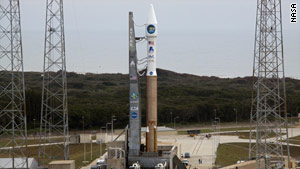
NASA has recently postponed the launch of a rocket carrying a solar probe, although they plan to launch the Atlas V rocket with attached Solar Dynamics Observatory, which will supposedly be able to study the sun in greater detail than ever before. The observatory is supposed to deliver solar images that are 10-times better than high-definition television.

Tuesday, February 9, 2010

Is This Cool or What?


NASA's Hubble Space Telescope took this image of a dying star 3,800 light-years away in the Scorpius constellation. The star itself, once about five times as massive as the Sun, is some 400,000 degrees Fahrenheit, making it one of the hottest known in the galaxy. In an immense galactic recycling project, the lost gas from the star, enriched by elements like oxygen, nitrogen and carbon produced by the formerly massive star, will form the stuff for future stars.

Whats Next?


The National Aeronautics and Space Administration had high hopes at its grand-opening. Sadly, only one part of their 'wish list' came through; in 1972, the Nixon Administration approved the space shuttle. Following the 1986 Challenger disaster, the Clinton administration finally reconciled the space station project. Then came Kennedy's 1961 challenge-landing a man on the moon. However, recently, the costs of other such endeavors leave little room for the undertaking of the projects. Congressional committees have not yet begun to examine new proposals from NASA, although, states Lori B. Garver, the deputy administrator of NASA,
For too long NASA overpromised and underdelivered, and now we will be doing things differently.

That remains to be seen.

Friday, January 29, 2010

New Genetic Testing

Recently, a Silicon Valley start-up company introduced a test to sell to couples that are possible carriers of a number of diseases, including cystic fibrosis, spinal muscular atrophy, and sickle cell disease. Once informed, these couples will be able to use vitro fertilization with genetic testing of the embryos, to avoid having children with such diseases, which are often incurable and fatal in childhood.

Obama's State of the Union Address: Successful?


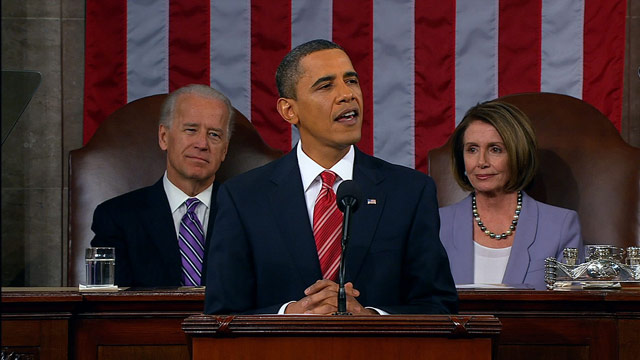
During his recent State of the Union address, President Obama reiterated many of the themes from his campaign; calling for change and condemning partisanship in Washington, while still maintaining a confidence in America's future.
The President stated:
I campaigned on the promise of change, change we can believe in...Right now, I know there are many Americans who aren't sure if they still believe we can change, or that I can deliver it. But remember this: I never suggested that change would be easy or that I could do it alone.

Although some were encouraged by his words, many were left skeptical about the promise of change. Recent polls suggest that much of Obama's popularity has faded. However, I believe that he still has a good chance of reclaiming the support he once had. After all, there is only so much one person can do alone-even the president. We must all take account for our actions, and do our part to help.

Is the Economy Finally Stabalizing?


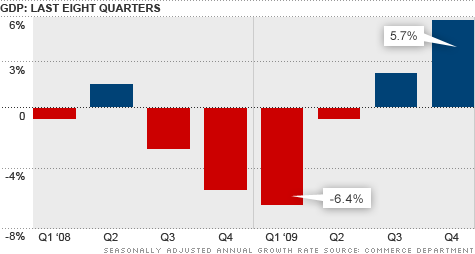
According to a recent report by CNN, the US economy grew at the fastest pace in more than 6 years, during the fourth quarter of 2009. The broadest activity was seen in the nation's GDP, which rose at an annual rate of 5.7% in the last quarter. Economists are speculating about another 4.7% growth.

Monday, January 11, 2010

Space: The Final Frontier


For an assignment for school, I am required to engage in a community service project. This will involve not only doing a certain amount of community service, but also tracking my progress and relating my project to a larger national or world issue/topic. As I am very interested in science, and am looking into majoring in physics in college, I decided that doing a project that involved a scientific theme would be both entertaining and educational. The Chabot Space and Science Center has numerous volunteer opportunities, for a wide age range. I have recently contacted the organizer for volunteers and am waiting to learn when and where the orientation (mentioned in the instructions) will take place.

(Image used from the observatory and astrophotography section)

Thursday, January 7, 2010

New Health Standards on the Rise


The Environmental Protection Agency proposed new standards on smog-causing pollutants. Although this will help substantially with health benefits for millions of Americans, it will also create large costs on industry and local governments. This new standard would replace one that President Bush administrated in March 2008. This proposal would set a standard for ground-level ozone of no more than 0.060 to 0.070 parts per million, and would be introduced over a two-decade period.

New Gay Rights Bill Failed

New Jersey's state Senate recently defeated a bill that proposed the legalization of gay marriage. Only 14 out of the required 21 required senate votes were for the bill. Gay rights activists had worked hard to get the bill passed before January 19th, when Republican Chris Christie will become the new governor of New Jersey, as Christie stated that he would veto the bill. Currently there are five states that allow gay marriage-Connecticut, Iowa, Massachusetts, New Hampshire, and Vermont.

The Day the First Fish Walked On Land


New fossils found in Sweden are suggesting that the first fish that stepped out of the water were actually much more ancient than first thought.

The 17 Deadliest Climate Killers

Finally, there is a group of people we can blame climate change for. Well, maybe not. This group, however, who includes Warren Buffett, Rupert Murdoch, and the infamous John McCain,are leading efforts to change and ultimately stop climate control efforts.