Friday, February 26, 2010

The Endeavour Returns!

A little hard to see at some points, but still very cool. How many people can honestly say they've seen a space ship landing?

All New TV Drama! Obama vs McCain...

Highlights of the recent health care summit.

Health Care: The Final Frontier

This is an interesting discussion about the pros and cons of the health care debate.

Wednesday, February 17, 2010

Possibility of Reality: The Little Green Men


Although a recently discovered planet "didn't miss the habitable zone by that much" stated David Charbonneau of the Harvard-Smithsonian Center for Astrophysics, this would deffinitely not be the ideal vacation spot. Even disregarding the 400 Farenheit temperature on the surface of the ocean, the superheated steam and fog, among other gases makes this planet less than ideal.

R.I.P Geoffrey Burbidge

A notable English Physicist, Geoffrey Burbidge recently died on January 26, at the ripe old age of 84. He had previously worked at the University of California, San Diego, as a Physics professor. Dr. Burbidge was one of the last remaining of the postwar era in astronomy, who initially became a towering figurehead by helping to explain that everything is made of stardust. Ever seen the movie Stardust? I'm going to guess its not exactly like that -as far as I know, there aren't any magical walls that would turn us into dust upon crossing. However, Burbridge's theory may be somewhat more realistic. Especially among the most massive stars, they can in their lifetimes not only burn hydrogen into helium for light and heat, but then ignite the helium to produce other elements such as carbon and oxygen. Eventually the star will then explode, and the bits and pieces will mix together and form new stars. This ever present cycle makes the universe continuously richer in heavy elements.
An old friend of Dr. Burbridge, Allan Sandage of Carnegie Observatories, explained it:
Every one of our chemical elements was once inside a star. The same star. You and I are brothers. We came from the same supernova.

Farfetched? Perhaps. But don't quite rule out the possibility yet -you may indeed need to adjust your family history time lines, to include a number of planetary nebulae and super nova.

Up, Up, and Away!


The space shuttle Endeavour finally achieved lift off on this last Monday morning-the second attempt, after clouds foiled the first. The shuttle blasted off on schedule at 4:14 a.m. - personally, I think a very fine time (its my birthday)- and this launching marks one of the last of the Endeavour. It is now carrying up the last major piece of the International Space Station, and is also delivering spare parts for the station's water system. Interesting how far we've come - from "Us against Them" to an International Space Station...hopefully this can continue to greater heights in the future.

Wednesday, February 10, 2010

Power to the States!


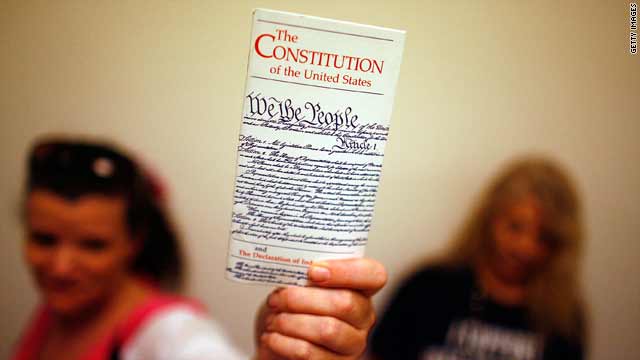
A 'tether' movement that has been growing over the last two years have been urging the states to 'exert' their rights over the 10th amendment, which states,
The powers not delegated to the United States by the Constitution, nor prohibited by it to the States, are reserved to the States respectively, or to the people.
A number have states have already passed resolutions, which, although they have no legal authority, aim to show how state's rights are being trampled.

Ready to Blast Off

NASA has recently postponed the launch of a rocket carrying a solar probe, although they plan to launch the Atlas V rocket with attached Solar Dynamics Observatory, which will supposedly be able to study the sun in greater detail than ever before. The observatory is supposed to deliver solar images that are 10-times better than high-definition television.

Tuesday, February 9, 2010

Is This Cool or What?


NASA's Hubble Space Telescope took this image of a dying star 3,800 light-years away in the Scorpius constellation. The star itself, once about five times as massive as the Sun, is some 400,000 degrees Fahrenheit, making it one of the hottest known in the galaxy. In an immense galactic recycling project, the lost gas from the star, enriched by elements like oxygen, nitrogen and carbon produced by the formerly massive star, will form the stuff for future stars.

Whats Next?


The National Aeronautics and Space Administration had high hopes at its grand-opening. Sadly, only one part of their 'wish list' came through; in 1972, the Nixon Administration approved the space shuttle. Following the 1986 Challenger disaster, the Clinton administration finally reconciled the space station project. Then came Kennedy's 1961 challenge-landing a man on the moon. However, recently, the costs of other such endeavors leave little room for the undertaking of the projects. Congressional committees have not yet begun to examine new proposals from NASA, although, states Lori B. Garver, the deputy administrator of NASA,
For too long NASA overpromised and underdelivered, and now we will be doing things differently.

That remains to be seen.